Introduction: A Transformational Decade for Saudi Hospitality
Saudi Arabia’s hospitality sector is undergoing one of the most ambitious transformations in the global tourism industry. Long known primarily for religious tourism centered in Makkah and Madinah, the Kingdom is now rapidly diversifying its tourism and leisure offerings under the Vision 2030 economic reform program. This shift is reshaping the hotel industry, attracting global brands, unlocking massive investments, and creating a more balanced mix of religious, business, and leisure travel demand.
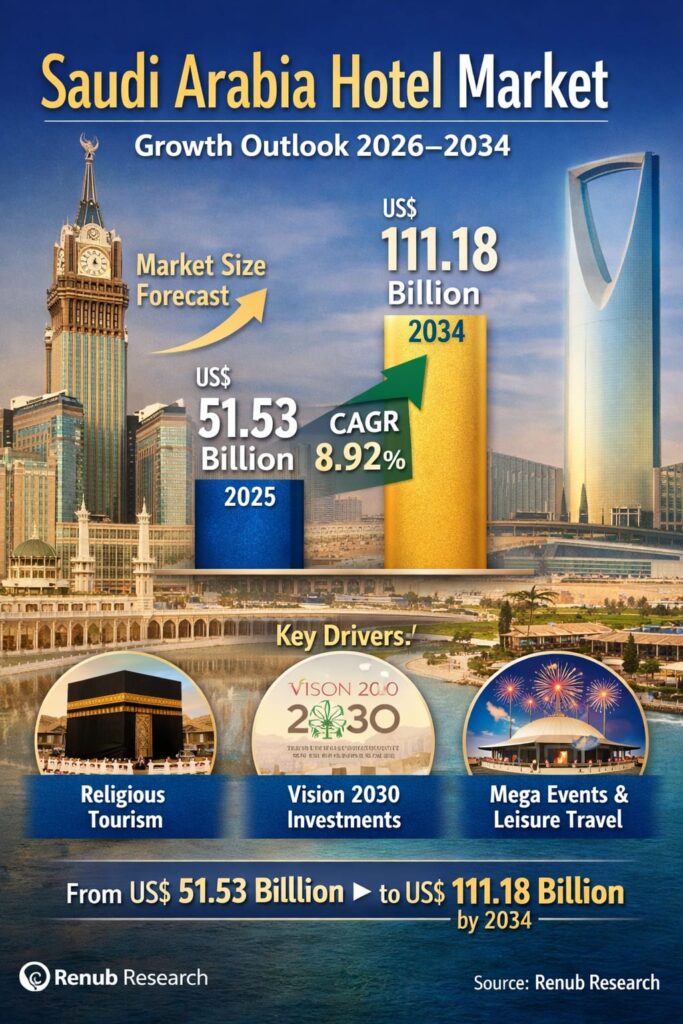
According to Renub Research, the Saudi Arabia Hotel Market is expected to reach US$ 111.18 billion by 2034, up from US$ 51.53 billion in 2025, growing at a CAGR of 8.92% from 2026 to 2034. This robust growth reflects not only rising visitor numbers but also the rapid expansion of hotel capacity, the entry of international chains, and the development of mega tourism projects across the Kingdom.
From luxury resorts on the Red Sea coast to budget and midscale hotels in pilgrimage cities, Saudi Arabia’s hotel landscape is becoming broader, more competitive, and more globally aligned. The coming decade will likely define the country’s position as a major tourism and hospitality hub in the Middle East and beyond.
Saudi Arabia Hotel Market: Industry Overview
The Saudi Arabia hotel market comprises a wide range of lodging options, including budget hotels, midscale properties, luxury hotels, serviced apartments, resorts, and boutique accommodations. Historically, the market has been heavily influenced by religious tourism, with Makkah and Madinah acting as the primary demand centers due to Hajj and Umrah pilgrimages.
However, the scope of the industry has expanded significantly in recent years. Riyadh has emerged as a major business and events destination, Jeddah is strengthening its role as a commercial and leisure gateway, and new destinations such as Al-Ula, NEOM, and the Red Sea coast are positioning Saudi Arabia as a high-end leisure tourism market.
Hotels today are increasingly focused on modern guest expectations. Digital booking platforms, smart room technologies, loyalty programs, and personalized services are becoming standard. At the same time, large-scale infrastructure investments—airports, high-speed rail, urban transport, and entertainment districts—are improving accessibility and supporting higher visitor volumes.
With strong government backing, increasing private investment, and the entry of major international hotel brands, the Saudi hotel industry is shifting from a volume-driven pilgrimage market to a diversified, experience-oriented hospitality ecosystem. More
By Shiv 9696